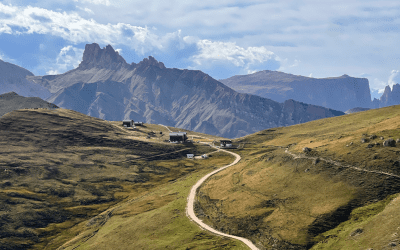
Planning your first hut to hut hiking excursion? This beginners’ guide will help you make some important decisions about your trip, including what to expect, what to pack, and what to leave at home.

Why You’ll Love Hut to Hut Hiking
Think of hut to hut hiking like an elevated version of thru-hiking. It requires less gear than backcountry camping but is still a great way to get out and enjoy the landscape with minimal impact. Enjoy creature comforts like a hot meal, a warm bed, and a toilet that flushes at the end of each day while still covering major ground. It also supports local businesses, makes good use of lodge facilities in the off season, and is accessible for all ages.
Before You Go Hut to Hut Hiking…
There are a few important questions you should ask yourself to help plan your trip.
When & Where Are You Going?
This question is most important in regards to climate. While you can hike hut to hut in winter in some places, it’s most appealing as a warm weather activity. Consider trekking during the shoulder season for less crowded trails and more competitive accommodation rates.
How Long Are You Going?
If it’s your first time hiking hut to hut, be realistic about how much hiking you actually want to do and are capable of. Trips of five days or less are recommended for first-timers. Don’t go alone, either. Travel with a trusted partner, friend, or with an excursion group.
How Much Are You Willing to Carry?
Keeping your hiking pack as light as possible during trekking days is the goal. If you’re including any other travel during your trip, you may want to have a few more clothing options and personal items with you at some point. Even just a few additional items can add up in your pack, though. If you don’t need to hike hut to hut with those things, luggage transfers are a convenient (but expensive) option. Otherwise, plan your trip accordingly: keep activities casual and outdoor-wear friendly. Consider building laundry days into your itinerary, or do a bit of shopping when you get to where you’re going.

How to Plan Your Self-Guided Hut to Hut Hiking Itinerary
From the cheapest to the easiest, there are a few different options when it comes to planning your hut to hut hiking itinerary.
1. Do it Yourself
The cheapest and most involved option is to plan your itinerary yourself. In many areas where hut to hut hiking is popular, like the Tour de Mont Blanc, certain routes will be so highly trafficked, a lot of the routes and rifugio selections are self explanatory. If you want to do a custom route, research trail options that match your distance goals and where to stay along the way.
2. Follow a Pre-Planned Itinerary
You can find plenty of pre-planned custom itineraries online. This way, you can still have a unique experience off the well-worn paths but have done much of the legwork of research is already done for you.
3. Hire a Trip Planner
A more expensive but low-effort option is to hire a trip planner. This way you can still travel independently but trust the experts to plan it for you. Some basic packages will provide you with a planned itinerary and accomodation options then leave the booking and logistics up to you.
Full-service options will handle booking accommodations that match your price points, arrange other activities and excursions, and include resources and contacts, some of which may even in-destination, to help if you have any questions or issues along the way. One example of such a service is the Dolomites Ronda program, which offered through Dolomiti Superski so you can trust you’ll be in good hands.
4. Join an Excursion Group
If you’re a solo traveler or looking for the most fool-proof option, join a trekking group. In some countries like Nepal, joining a guided trek is a necessity to accessing the region. On a group trip, guides care of all the details for you and are with you every step of the way–literally!

Rifugios & Mountain Huts: What to Expect
Many rifugios, also called “mountain huts,” are like hostels, with shared bedrooms, bathrooms, and communal spaces. Some will offer private bedrooms for a higher cost. Expect most rifugios to provide a multi-course pre-fix dinner and a simple buffet-style breakfast. A few may also offer a packed lunch on your departure day for a small fee. Many rifugios also operate as cafes during the day, serving snacks, baked goods, and refreshments to multi-night lodgers or hikers passing through.
Much of what a rifugio can offer hinges on how remote it is. For example, some farther off-grid huts only receive supplies once a month via helicopter drop off. They may only use a small amount of electricity from solar panels for their kitchens or other appliances. Mountain huts located on access roads or close to towns are generally more equipped with fresher food and more amenities.
While the mountain hut experience may vary, there are a few things to know about what you should and shouldn’t bring for your stay, no matter where you go.
What to Bring
> Indoor shoes. Mountain huts have boot rooms, and as a general rule you’re not to wear your hiking boots indoors. Have a pair of lightweight flip flops, which can also be worn in the shower, to wear around the rifugio.
> A Sleeping Liner. While some rifugios have bed linens, a sleeping liner provides an extra layer of hygienic protection.
> A Microfiber Towel. Again, some rifugios may provide towels, but it could be at a cost. Besides, you might find a small microfiber towel handy on the trail, too.
> An Extra Long Lightning Charging Cable. If you need to charge a mobile device (assuming there’s adequate electrical connection) bring an extra long lightning cable. There’s no guarantee your bed will be near an outlet, especially in a shared room.
> Comfortable Loungewear. Many hikers will wear most of the same soiled clothes every day on the trail. Have a clean pair of loungewear clothes to relax in and wear to meals around the rifugio.
> Ear Plugs + Eye Mask. If you’re a light sleeper, ear plugs or an eye mask are a godsend in a mountain hut full of people.
What NOT to Bring
> A ton of food. With rifugio meals provided, You don’t need to be carrying extra food. Also, you don’t want to attract any pests in the mountain huts.
> A water filtration system. This item largely depends on where you’re hiking. In places like the European Alps, water sources are plentiful and clean.
> Bear spray/weapons. Again, this depends where you’re hiking. In European countries, items like pepper spray are prohibited and bear spray is unnecessary.
> Too Many Clothing Options. As mentioned before, plan to more or less hike in the same clothes every day, especially if you’re only trekking for a couple of days. Some mountain huts have washing machines you can use for a small fee if needed. Other hikers sink-wash quick-drying items and hang them overnight to dry when needed. Or, bring an alternate option to swap out every other day to get more weartime from your clothing.
>Things for “Just in Case.” You might think you need to bring a tent or a sleeping bag “just in case,” but you don’t. While emergencies can happen anytime anywhere, you likely have bigger problems or better options if you do end up needing those items.
What Else Do You Need for Hut to Hut Hiking?
What you need to bring for hut to hut hiking depends on where you’re hiking and when. For most areas, these items are essential and will still come in handy.
A map and compass. Have a compass and know how to use it. If you lose signal or your phone dies, you should still know where you are and where you’re going.
Good Footwear. Consider the terrain you’re hiking and your individual foot needs. Sometimes heavy-bottom boots are cumbersome where a hybrid trail runner might suffice. How important is waterproof to you? Invest in high-quality footwear, and do not attempt hut to hut hiking in street shoes.
A First Aid Kit. A simple baggie of anti-inflammatory and diarrhea medication, bandaids, tape, scissors, and an ace bandage is enough to equip you for most situations.
Waterproof + Thermal Layers. A rain cover for your pack and a rain jacket for yourself are a good idea in almost any climate and any season. In shoulder seasons like spring and fall, light thermal base layers might also come in handy.
Sunscreen. Many trails are exposed, and even if the weather isn’t particularly hot, the sun can take its toll, especially when hiking at higher altitudes.
Hut to Hut Hiking Regions
Explore some of the world’s most wondrous regions for hut to hut treks based on experience levels.
Disclaimer: for the purposes of this article, “ease” is based on accessibility and infrastructure. Some trails, while easy to access, may still be rigorous and physically demanding.
Beginner-Friendly
The Alps
From the Italian Dolomites to the Swiss, Austrian, and French Alps, these areas are the gold standard in hut t0 hut hiking and an easy stepping stone for first-timers.
Scotland’s Highland Way
The Scottish Highlands pair incredible scenery with charming villages. You can avail of Scotland’s right to roam and wild camp, but it’s also a great place for hut to hut treks.
Intermediate Level
Norway’s Fjord Country
The Norwegian Trekking Association maintains hundreds of huts connected by marked trails, many of which are private and self-service, providing a unique and more independent experience for your hut to hut hiking adventure.
New Zealand’s Great Walks
New Zealand’s Department of Conservation manages a network of well-equipped huts that need to be booked well in advance. Combine your hut to hut hike with a road trip adventure for the ultimate New Zealand outdoor enthusiast experience.
For Advanced Trekkers
Nepal’s Teahouse Treks
Nepal’s trekking is unparalleled but not for the inexperienced. This is one where you’ll probably need to hire an excursion guide for the high-altitude climbs between traditional teahouse mountain huts.
Kyrgyzstan’s Tian Shan
More of a yurt to yurt experience, the Tian Shan route in Kyrgyzstan offers unparalleld cultural immersion. The terrain is extremely rugged and remote with limited infrastructure, making this one of the most extreme of the extreme for hut to hut hiking.
Hut to hut hiking is a great way take on a more serious trek without sacrificing all your favorite modern comforts. Save this beginners guide to make planning your first hut to hut trip less overwhelming so you can spend more time and energy being excited about the adventure ahead!