The best Greece travel tips are the ones you won’t find in big-name travel articles or top-pick lists. They’re real insights from first-hand travel experiences that are way more helpful than “book early” and “pack sunscreen.” Some of these items may be specific to certain regions, but there is plenty of useful information for general travel to Greece. Even if you’re traveling elsewhere in the Mediterranean, like Menorca or Albania, these practical and responsible travel tips will come in handy.
Top Greece Travel Tips
First things first: Don’t flush your toilet paper.
Let’s get the most awkward Greek travel tip out of the way first. It’s true, you don’t flush anything down the toilet in Greece, not even toilet paper. Greek plumbing uses narrower pipes, which become easily blocked even by simple bath tissue.
When I first arrived in Greece, I stayed in Old Town Rhodes. Our accommodation had signs in the bathroom warning users not to flush anything, and I saw similar warnings in nearby restaurants and businesses. I wasn’t particularly surprised. Historic areas around the world are known for fragile plumbing systems. Why would the medieval walled Old Town of Rhodes be any different? However, it became clear the practice of putting soiled toilet paper in a commode-side bin is customary across the country, even in cities and new developments.
Beware of cats.
While researching for our trip to Greece, I learned all about the iconic cats of Rhodes. In fact, we saw feral felines roaming throughout the other islands like Karpathos. Before you worry about the smell, rest assured that 90% of the places we explored were scat-free.
Personally, we didn’t find the cats in Greece to be a nuisance. After all, they help with pest control. Some locals and business owners set out water bowls, basic shelters, and small piles of kibble for them. However, some tourists feed them right from the tables at tavernas which encourages bothersome behavior. Don’t feed the cats in Greece. Leave that to the locals.
Water scarcity is real.
Greece is known for its arid climate and related water scarcity. Visitors to Greece should know that not all water is potable even if it comes out of the tap in your bathroom or kitchen. For example, on Karpathos our bathroom shower, sink, and kitchenette all used salt water.
Instead, people fill up reusable containers at public potable water fountains. Unfortunately, we didn’t know this until after we had already purchased a pack of bottled water. Ask around in your area about the nearest water source and refill and reuse bottles to cut down on single-use plastics. The water at these sources is tested for safety and quality, but if you’re still unsure or finicky about the taste, travel with a steel filter straw. We like these compact Lifestraws.
Driving takes longer than Google Maps says.
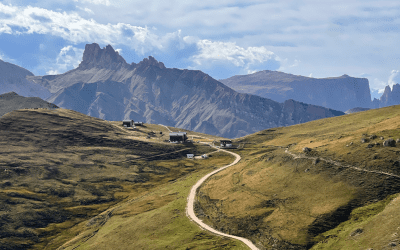
On mountainous Greek islands, roads are narrow, winding, and often covered with fallen rocks big enough to burst a tire. If you’re traveling somewhere remote, give yourself extra time because it’s unlikely you’ll drive as fast as the speed limit allows. For example, the road to Olympos on Karpathos wasn’t constructed until the 1980s and remains quite treacherous in many sections.
Single-use plastics might surprise you.
Greece uses a landfill system for waste management and doesn’t have the strongest recycling program. Elsewhere in the EU, efforts to reduce single-use plastics are more advanced while Greece is still in the process of phasing out many of it’s plasticware. Remember, just because you’re offered a plastic bag doesn’t mean you have to use it. Travel with your own canvas bag and water bottle.
Ferry schedules are released seasonally.
The ferry schedule from Rhodes to Karpathos was the most annoying thing about planning this late spring/early summer trip to Greece. We were traveling in mid-May, but even by March the May ferry schedule from Rhode to Karpathos still wasn’t available, even though April and June through the rest of the summer were scheduled.
Eventually the schedule was announced later in the month. Luckily, sailings matched the weeks leading up to the gap, so we were able to loosely plan our trip using that schedule as a tentative guide. The uncertainty was still nerve-wracking, though. A local told us this delay in announcing happens when the ferry operators are unsure which vessel will be completing the sailing.
Cash is king but should you leave a tip?
In Greece, cash is preferred to card, especially on the smaller islands. In fact, some independent merchants and tour operators only accept cash. On the mainland, cards are more widely used but carry cash if you’re going to any of the islands or rural communities.
When it comes to tipping, every country is different so it’s a good idea to research customs no matter where you’re going. In Greece, tipping is not expected but not uncommon. We would often leave loose change after a few rounds of drinks or a casual lunch and maybe 10% of our total bill after nicer meals. Remember that tipping, if you’re able, is a simple gesture of gratitude towards staff that work very hard to create a world-renowned hospitality experience. Think of tipping like paying it forward (if you’re able) but like the rest of Europe, tipping in Greece doesn’t have the expectations as in the United States.
The start of shoulder season in Greece is the best time to visit.
The most popular places in Greece like Athens, Mykonos, and Santorini remain pretty much fully open year-round, just with fewer crowds in the winter. In other parts of Greece, a more distinct off-season means some businesses, accommodations, and amenities close for part of the year.
We visited Rhodes and Karpathos in mid-May. In Karpathos, the season doesn’t get into full swing until the end of the month. Aside from a few businesses still in the process of opening or getting fully-stocked with provisions, the island seemed fully operational yet calm and quiet. Here’s why visiting right before the high season is the best time of year to go to Greece:
- Enough is open that it doesn’t limit your experience.
- The beaches are quiet and not yet covered edge-to-edge with umbrellas and loungers, which you have to pay to use.
- There is less traffic on those treacherous roads we mentioned earlier.
- Accommodation rates are more affordable.
- The staff is excited to see you.
The last point is the most important. Hospitality workers in Greece work really hard during the season and then many take a well-deserved break during the off season (not just go somewhere else to work more). So at the start of the season, they’re refreshed and excited to get back to work (and make money.) This energy was palpable on Karpathos where we were greeted warmly in every establishment and often treated to complimentary food or drinks. Locals told us that by September staffers are exhausted and ready for the tourists to go home.
Respect sacred spaces.
Ancient history is one of the top reasons people travel to Greece. Whether you’re admiring an acropolis or stepping foot in a family chapel, Greece’s sacred spaces need to be preserved and protected. Don’t stand, sit, or pose on ancient ruins (yes, we saw this at the Lindos Acropolis), and always ask permission before filming or taking photos.
The culture, climate, history, and people of Greece are revered around the world. These Greece travel tips ensure visitors can have a more sustainable trip full of only the best surprises.